Key Points
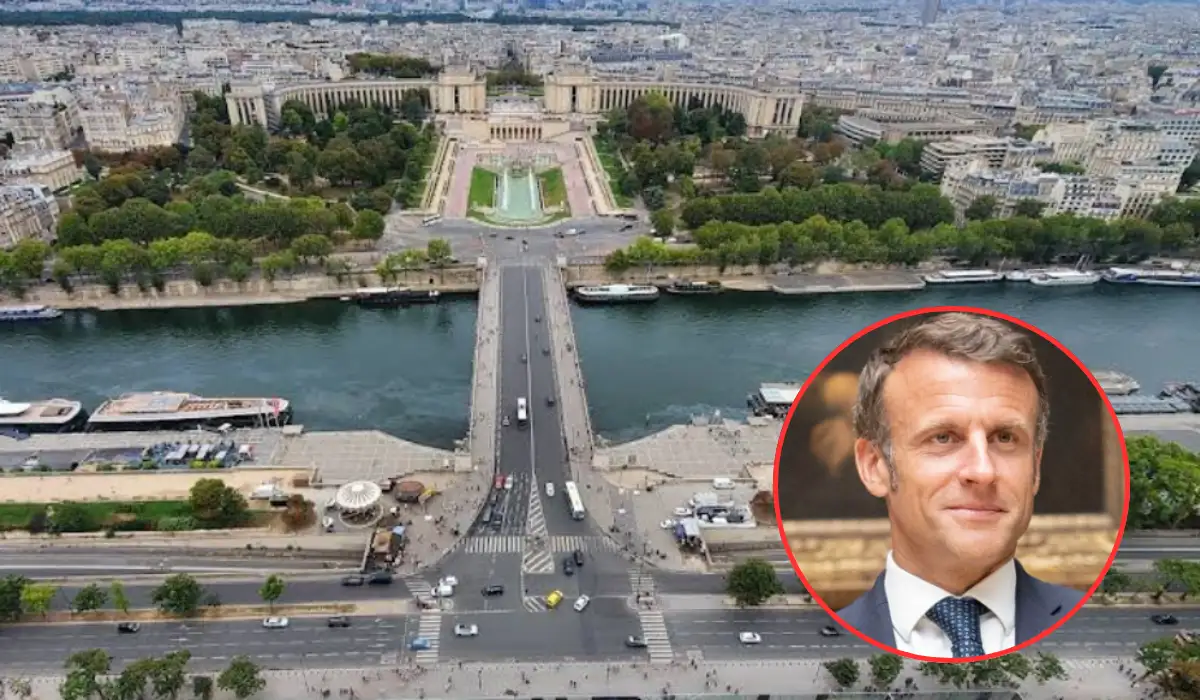
- French President Emmanuel Macron and Chinese Foreign Ministry Spokesperson Guo Jiakun led international congratulations to Luiz Inácio Lula da Silva following his presidential re-election victory in Brazil.
- Lula secured a historic comeback in the second-round run-off vote, defeating conservative Senator Flávio Bolsonaro by over 4 million votes after trailing in the first round.
- Flávio Bolsonaro has formally contested the election outcome, calling for an annulment based on a controversial Supreme Court ruling that extended voting hours by two hours.
- Latin American governments showed partisan alignment: left-wing leaders in Mexico and Cuba sent enthusiastic praise, while right-wing leaders in Chile, Peru, and Ecuador offered pragmatic assurances of continued cooperation.
- Lula faces immediate governance challenges in his upcoming fourth term, constrained by a heavily conservative Congress and a sluggish economy burdened by high interest rates and public debt exceeding 82 per cent of GDP.
France (France News7) October 27, 2026 – French President Emmanuel Macron and Chinese Foreign Ministry Spokesperson Guo Jiakun have spearheaded a flood of diplomatic congratulations to Luiz Inácio Lula da Silva following his second-round run-off victory over Senator Flávio Bolsonaro in the Brazilian presidential election. The election result, confirmed on Sunday by Brazil’s Superior Electoral Court (TSE), marks an unprecedented political return for the 80-year-old leader, who overcame a first-round deficit to secure a historic fourth term in office. However, the immediate aftermath of the vote has been overshadowed by legal resistance from the opposition camp as Senator Bolsonaro refuses to concede, demanding an official annulment over emergency Voting day extensions ordered by the judiciary.
- Key Points
- How Did International Leaders React to President Lula’s Re-Election Victory?
- Why Is Flávio Bolsonaro Demanding an Annulment of the Election Results?
- How Did Lula Achieve an Unprecedented Political Revival?
- What Major Political and Economic Hurdles Await Lula’s Fourth Term?
- Background of the Electoral Development
- Prediction: How Will Lula’s Fourth Term Impact Key Audiences?
How Did International Leaders React to President Lula’s Re-Election Victory?
French President Emmanuel Macron emerged as one of the first Western heads of state to welcome the outcome of the Brazilian general election. As reported by Paris-based international correspondents, Macron expressed optimism regarding future diplomatic ties, framing the outcome as an opportunity to reinforce global equity and bilateral ties.
“France and Brazil have much to build together,” Macron posted on social media, emphasizing that both nations must nurture their friendship “in the service of a fairer world”.
Diplomatic praise quickly extended beyond Europe to Beijing. As reported by foreign correspondents covering the official Chinese foreign ministry briefing, Chinese Foreign Ministry Spokesperson Guo Jiakun confirmed that the Chinese state had officially acknowledged the decision rendered by Brazil’s Superior Electoral Court.
“China has noted that Brazil’s Superior Electoral Court has announced President Lula has won the second round of the Brazilian general election, and expresses its congratulations,” Guo Jiakun stated.
Guo added that Beijing remains “willing to work with Brazil to continue advancing the building of a China-Brazil community with a shared future”.
Across the Western Hemisphere, diplomatic responses reflected distinct political alignments. Left-wing administrations across Latin America, notably in Mexico and Cuba, sent enthusiastic messages of solidarity to the veteran Brazilian leader. Conversely, right-wing regional executives—including the presidents of Chile, Peru, and Ecuador—issued measured diplomatic assurances, confirming their intent to maintain working relationships with Brasilia to advance shared regional objectives.
Why Is Flávio Bolsonaro Demanding an Annulment of the Election Results?
Despite the official declaration from electoral authorities, the defeated candidate, Senator Flávio Bolsonaro, has formally rejected the outcome of the run-off vote. Although initial returns from the first round of voting on 4 October showed Bolsonaro leading the race, the official run-off tally published by Brazil’s Superior Electoral Court confirmed that Lula ultimately claimed victory by a margin exceeding 4 million votes.
Bolsonaro’s challenge centers on an emergency ruling issued on Sunday by a Supreme Court justice, which extended voting hours by two hours across select jurisdictions. Opposition representatives contend that this judicial intervention fundamentally altered the voting conditions, prompting Bolsonaro to declare that he will seek a full annulment of the vote.
However, political observers note an inherent contradiction in the opposition’s legal stance. Prior to the court’s intervention, Bolsonaro’s own campaign team had actively petitioned authorities for voting extensions in conservative-leaning southern regions, citing severe disruptions caused by heavy rainfall.
Political analysts have expressed strong skepticism regarding the likelihood of any judicial reversal. Mario Braga, a Latin America risk analyst at the consultancy firm RANE, offered an assessment on the potential for political unrest:
As reported by political risk analysts at RANE, Mario Braga stated that while right-wing protests could emerge in the coming days, “it’s very improbable that it will lead to the reversal of the result.”
How Did Lula Achieve an Unprecedented Political Revival?
Lula’s victory stands as a significant milestone in modern Brazilian political history. He is the first presidential candidate since Brazil’s restoration of democracy in the 1980s to win a presidential election after finishing second in the initial voting round.
The triumph marks another dramatic chapter for the former metalworker and trade union leader, who served as Brazil’s president from 2003 to 2010. His political path faced immense hurdles when he was imprisoned between 2018 and 2019 on corruption charges—convictions that were subsequently annulled by the Supreme Court, restoring his political rights and enabling his return to the presidency after defeating Jair Bolsonaro, Flávio’s father, in 2022.
Reflecting on the atmosphere in São Paulo during the final vote count on Sunday, Federal Lawmaker Érika Hilton offered praise for the president-elect.
As reported by Reuters news agency, Federal Lawmaker Érika Hilton stated: “He is a statesman, a giant.”
Despite his ultimate victory, Lula’s path to re-election was fraught with political obstacles. Public dissatisfaction with his Workers’ Party (PT) had mounted in recent years, driven by lingering memories of past corruption controversies and persistent domestic inflation. Furthermore, sweeping socio-economic shifts had left critics questioning whether the veteran trade unionist remained attuned to an evolving, platform-based gig economy populated by expanding numbers of informal workers.
Electoral analysts attribute Lula’s final victory margin to an unexpected surge in voter participation during the run-off.
As reported by political analyst Leonardo Barreto, co-founder of the consultancy Think Policy, voters ultimately preferred political predictability over political novelty. Barreto noted that “people today are choosing between change, with some apprehension, and a known path, which guarantees certain rights.”
Throughout his campaign, Lula combined pragmatic governance proposals with traditional populist messaging. He warned voters that a Bolsonaro victory would lead to severe cuts in social welfare programmes, a regression in civil rights, and an excessive alignment of domestic sovereignty with United States President Donald Trump.
To boost turnout, Lula promised sweeping economic incentives late in the campaign. These included a proposal for free nationwide public transport on weekends—which must still undergo congressional approval—and a pledged 15 per cent expansion of his flagship social welfare initiative. He also highlighted his administration’s successful passage of a comprehensive constitutional amendment, representing Brazil’s most extensive labour reform in decades.
What Major Political and Economic Hurdles Await Lula’s Fourth Term?
While Lula has secured the executive branch, his upcoming fourth term is widely expected to be his most challenging governance environment to date. The concurrent parliamentary elections delivered the most conservative Congress assembled in Brazil since the end of military rule in the 1980s.
A coalition comprising Flávio Bolsonaro’s Liberal Party and its allied right-wing factions is projected to command more than 280 seats in the 513-member Chamber of Deputies, alongside up to 50 seats in the 81-member Senate. This combined voting block grants conservative parties a comfortable operational majority in both legislative houses. Consequently, political observers expect a acceleration of recent trends in which the executive branch has progressively conceded power to Congress over federal budget allocations, primary legislative drafting, and key judicial or administrative nominations.
On the macroeconomic front, the incoming administration confronts formidable fiscal constraints:
- Sluggish Economic Growth: Government projections estimate GDP growth will slow to just 2.3 per cent next year.
- Elevated Public Debt: Brazil’s public debt ratio has surged past 82 per cent of total GDP, reaching its highest level since the peak of the Covid-19 pandemic in 2020.
- Restrictive Monetary Policy: High central bank interest rates continue to elevate debt servicing costs, narrowing the fiscal space available for public investment and social spending.
Background of the Electoral Development
The election of October 2026 takes place against the backdrop of deep political polarization that has characterized Brazilian governance for over a decade. Luiz Inácio Lula da Silva originally rose to prominence as a trade union leader in São Paulo’s industrial belt during the late 1970s, eventually founding the Workers’ Party (PT). His initial presidency from 2003 to 2010 was marked by commodity-driven economic growth and social programs such as Bolsa Família, which lifted millions out of extreme poverty.
However, subsequent years saw the PT embroiled in widespread anti-corruption investigations, most notably Operação Lava Jato (Operation Car Wash). The scandal led to the impeachment of President Dilma Rousseff in 2016 and the imprisonment of Lula himself in 2018. The void created by the left’s crisis paved the way for the rise of right-wing populism, culminating in the 2018 election of Jair Bolsonaro.
After Lula’s convictions were thrown out on procedural grounds by the Supreme Court in 2021, he returned to the political arena to narrowly defeat Jair Bolsonaro in the 2022 presidential race. The subsequent four years were defined by intense institutional friction between the left-wing executive branch, a conservative-leaning Congress, and a highly active judiciary.
The 2026 contest represented a critical test of whether the conservative movement—represented by Jair Bolsonaro’s son, Senator Flávio Bolsonaro—could recapture executive power. By overcoming his first-round defeat through aggressive mobilization and targeted policy commitments, Lula achieved an unprecedented comeback in modern Brazilian history, cementing his status as the central figure of the nation’s political landscape.
Prediction: How Will Lula’s Fourth Term Impact Key Audiences?
The outcome of the 2026 Brazilian presidential election will have far-reaching implications for domestic and international stakeholders, particularly working-class Brazilians, foreign investors, and international diplomatic partners:
1. Working-Class and Informal Workers
For low-income households and informal workers, Lula’s victory likely guarantees the preservation and expansion of essential social safety nets, including the promised 15 per cent increase in welfare payouts. However, with conservative majorities controlling Congress, structural legislative changes—such as formalizing gig-economy workers’ rights or securing funding for nationwide free weekend transit—will face heavy resistance. Working-class voters may experience modest improvements in direct transfers, but systemic economic gains could be limited by broader macroeconomic headwinds.
2. Financial Markets and Institutional Investors
Global markets and domestic financial institutions face a complex outlook. While Lula’s victory offers institutional continuity over the right-wing volatility threatened by contested election results, fiscal managers face growing anxiety over public debt levels exceeding 82 per cent of GDP. Investors will closely watch whether Lula’s cabinet leans toward fiscal discipline or expanded deficit spending to fund campaign pledges. The presence of a conservative Congress will act as a structural check against radical fiscal shifts or tax expansions, likely resulting in policy gridlock that stabilizes market expectations while slowing structural economic reforms.
3. Global Diplomatic and Environmental Partners
On the international stage, Lula’s re-election will be welcomed by Western allies and developing-world blocs seeking global stability. Relations with major economic partners such as France and China are poised to deepen around shared trade and climate commitments. Furthermore, international environmental organizations anticipate continued federal protections for the Amazon rainforest. However, Lula’s pragmatic foreign policy will require navigating delicate geopolitical balancing acts, particularly in maintaining strong trade ties with China while managing relations with Washington.