Key Points
- French high school protests that began over staffing shortages, school resources and deteriorating buildings have spread nationwide.
- Interior Minister Laurent Nunez said 625 people were detained on Wednesday, most of them minors, while 83 police officers and gendarmes were injured.
- Education Minister Édouard Geffray said 119 students and education staff had been injured since the demonstrations began.
- Reuters reported that 356 high schools were affected by blockades on Wednesday, while the movement spread to universities on Thursday.
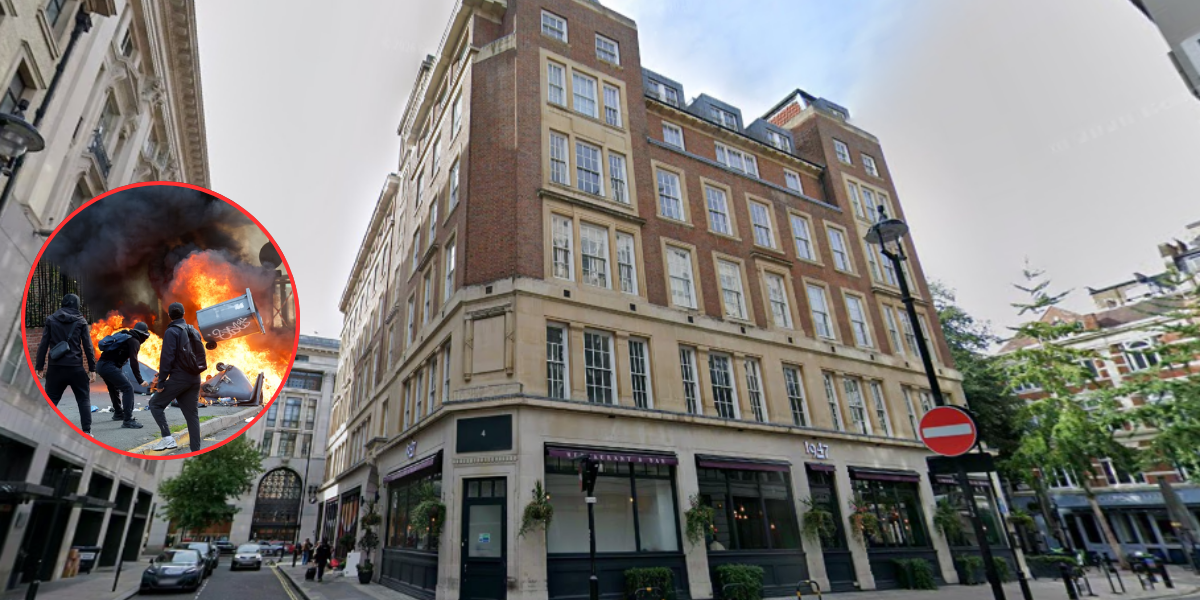
- Fires were reported at schools in Nantes and Marseille, while a fire engine was also set alight in Marseille, according to Reuters.
- Students in areas including Saint-Denis, Lyon, Lille, Nantes, Toulouse and Rennes have reported concerns about teachers, facilities and learning conditions.
- Students have also accused police of excessive force, including the use of tear gas and other crowd-control measures.
- President Emmanuel Macron condemned violence while acknowledging students’ concerns about conditions in French schools.
- Prime Minister Sébastien Lecornu convened an inter-ministerial crisis meeting as the unrest intensified.
- Education Minister Édouard Geffray instructed schools to move teaching online where blockades or damage prevent students from safely attending classes.
France News7 (FN7) October 1, 2026 – French high school protests over staffing shortages, school resources and deteriorating facilities have escalated into clashes with police, arson and hundreds of arrests, as the demonstrations spread from secondary schools to universities. Reuters reported that 625 people were detained on Wednesday, while 83 police officers and gendarmes were injured. Education authorities said 119 students and education staff had been injured since the mobilisation began. The government has responded with a crisis meeting and plans for remote teaching where schools cannot safely receive pupils.
- Key Points
- Why have French high school protests escalated across the country?
- What happened during the latest clashes?
- How many people have been arrested and injured?
- What are students saying about police tactics?
- What has the French government said about the violence?
- How widespread are the school blockades?
- What happened in Nantes, Marseille and other cities?
- Why are school conditions central to the dispute?
- What action has the government taken to keep education running?
- Why has Prime Minister Sébastien Lecornu called a crisis meeting?
- What is the political dispute surrounding the demonstrations?
- What could happen next with the French school protests?
- What is the background to the French student protest movement?
- How could the protests affect French students and the education system?
Why have French high school protests escalated across the country?
The protests began in French high schools during the previous week, initially focusing on complaints about teacher shortages, inadequate resources, overcrowding and the condition of school buildings.
According to Reuters journalists Lucien Libert and Antony Paone, writing from Saint-Denis on September 30, the movement had expanded to 356 high schools by Wednesday. Their report said demonstrations coincided with a wider public-sector strike and had become increasingly confrontational.
The protests have been particularly visible in working-class and economically disadvantaged areas. Saint-Denis, north of Paris, has become one of the main focal points.
Students have described classrooms and school facilities that they say are unsuitable for learning. Reuters quoted 17-year-old Fadila, a student at Lycée Paul Éluard in Saint-Denis, describing problems including pests, inadequate toilet facilities and severe temperature variations between winter and summer.
The grievances are not limited to physical infrastructure. Students have also called for absent teachers to be replaced and for additional resources to be provided to schools.
The movement has consequently combined demands about immediate school conditions with broader concerns about the pressure placed on pupils by France’s education system.
What happened during the latest clashes?
The demonstrations became significantly more violent as blockades spread.
Reuters reported on October 1 that protesters started fires at at least two French schools and that teachers were inadvertently splashed with petrol during an incident at another school. In Marseille, a student reportedly attempted to throw petrol into a rubbish bin at Victor Hugo high school, resulting in teachers being splashed.
At Saint-Exupéry high school in Marseille, police said hundreds of young people surrounded a fire engine that had arrived to extinguish a blaze. The firefighters were forced to leave the vehicle, which was subsequently set alight, according to Reuters.
Another major incident occurred in Nantes, where a fire damaged Lycée Nelson Mandela.
TF1info, in a report by E.R. published on October 1, said the school’s deputy head, Gaëlle Cordier, described the blaze as a voluntary fire. The fire spread from the school’s hall to its façade before being brought under control. No injuries were reported in the incident.
A separate report by La République Publique said the hall was badly damaged and the school could remain closed for several weeks. The report also said authorities were distinguishing between different types of blockades and actions rather than treating all reported figures as directly comparable.
How many people have been arrested and injured?
Interior Minister Laurent Nunez said 625 people were detained on Wednesday, according to Reuters journalists Lucien Libert and Antony Paone. More than 440 people had also been detained the previous day, with most detainees being minors.
Nunez also said seven incidents involved hydrochloric acid being thrown at law-enforcement officers.
The Interior Ministry figures underline the scale of the security response, although detention figures do not necessarily mean that every person detained will face charges or prosecution.
The number of reported injuries has also increased.
Education Minister Édouard Geffray said 119 students and education staff had been injured since the beginning of the mobilisation. Reuters reported that most injured education workers were school principals and teachers.
Separately, Nunez said 83 police officers and gendarmes were injured during Wednesday’s mobilisation.
The figures describe injuries across different groups and periods, so they should not automatically be added together as one single incident total.
What are students saying about police tactics?
Alongside complaints about education conditions, some protesters have criticised the police response.
Reuters reported that students in Saint-Denis questioned the use of tear gas and other crowd-control methods. One student was photographed holding a sign asking whether protesters could explain their concerns without being tear-gassed.
The material supplied for this report also describes an incident involving a 14-year-old boy, identified as Eden L., who was allegedly struck in the face by a tear-gas projectile. His family’s lawyer reportedly accused police of excessive violence and said a formal complaint was being submitted.
CNN was reported to have sought comment from the Saint-Denis police prefecture regarding the allegation.
Such allegations remain matters for the relevant investigations and legal processes. They should therefore be distinguished from confirmed findings about police conduct.
The wider confrontation has nevertheless become another source of tension between students and authorities, with protesters arguing that the policing of demonstrations is disproportionate.
What has the French government said about the violence?
President Emmanuel Macron has condemned violence during the protests while also recognising that students have legitimate concerns about their schools.
Reuters reported that Macron, speaking during a state visit to Spain, said students’ anxieties and anger should be understood but that these concerns did not legitimise violence. He also criticised elected officials whom he said appeared to be encouraging or legitimising violent action.
Macron’s comments came as political debate intensified around the role of elected representatives who have appeared at schools where protests were taking place.
Saint-Denis mayor Bally Bagayoko, associated with the left-wing France Unbowed movement, appeared at protests. The material supplied for this report quoted him as saying that violence could sometimes be legitimate, while also stating that it should be avoided where possible and that young people should be held responsible when they break the law.
Other political figures have criticised his position.
Le Monde reported that the government and opposition figures have exchanged accusations over political involvement in the demonstrations. The publication also reported that Bagayoko defended his presence among protesting pupils while rejecting accusations that the movement was being politically instrumentalised.
These political disagreements have added another dimension to a dispute that began principally around education conditions.
How widespread are the school blockades?
The scale of the disruption has changed rapidly.
Le Monde reported that 356 high schools were subject to at least partial blockades on Wednesday, compared with 338 at the same time on Tuesday, according to Interior Minister Laurent Nunez.
Reuters similarly reported that the protests had reached 356 high schools by Wednesday.
On Thursday, the movement expanded beyond secondary schools.
The Union Étudiante said around 30 university campuses were blocked, with affected sites including institutions in Paris, Strasbourg, Marseille, Lyon, Reims, Poitiers and Nanterre.
Reuters Connect, carrying material from Anadolu Agency, also reported that more than 15 universities had been blocked, including campuses associated with Strasbourg, Aix-Marseille, Poitiers and Paul-Valéry University.
The difference between the figures reflects different reporting periods and definitions of disruption rather than necessarily conflicting accounts.
What happened in Nantes, Marseille and other cities?
Nantes and Marseille have emerged as important locations in the latest escalation.
In Nantes, the Nelson Mandela high school suffered a fire that damaged its hall and façade. Local officials said the building was evacuated and no injuries were reported.
In Marseille, Reuters reported two serious incidents. Teachers were accidentally splashed with petrol during an attempt to start a fire at Victor Hugo high school, while a fire engine was set alight after firefighters were confronted by a crowd.
Lyon and Lille have also experienced confrontations.
Reuters reported that television images showed projectiles being thrown towards police lines in Lyon and Lille. Reuters Connect also reported barricades and fires in Lille, while authorities in the Rhône department reported disruptions affecting 27 schools.
Other cities affected by the mobilisation include Toulouse and Rennes, with reports of blockades, police deployments and clashes.
Why are school conditions central to the dispute?
The underlying dispute concerns the ability of schools to provide consistent education and suitable learning environments.
Students have highlighted teacher vacancies and the failure to replace absent staff. They have also raised complaints about ageing or damaged buildings, overcrowded classes and inadequate facilities.
Reuters reported that the Organisation for Economic Co-operation and Development places French education spending around the middle of the range among member countries. Reuters also noted that education spending increased in absolute terms between 2015 and 2022, although its share of the overall budget decreased slightly.
The protests therefore take place against a more complicated financial background than a simple reduction in education spending.
The French government is also dealing with pressure on public finances. The 2027 budget has become a major issue, with the government seeking savings while facing high public debt and borrowing costs.
Reuters reported that the government presented a belt-tightening 2027 budget involving measures intended to reduce the fiscal deficit. The financial situation has increased the pressure on ministers as they respond to demands for greater public services.
What action has the government taken to keep education running?
Education Minister Édouard Geffray has instructed schools to use remote teaching when blockades or damage prevent pupils from attending safely.
Le Monde reported that Geffray said teaching should continue remotely where school buildings cannot safely receive students. Decisions would be made case by case by school heads in coordination with education authorities.
Le Parisien, in a report by Florian Bouhot published on October 1, described the measure as an exceptional response intended to protect students while preserving their right to education.
Reuters reported that Geffray also planned meetings with education unions, parent organisations and student associations.
The government has therefore combined a security response with measures intended to maintain education and open discussions about students’ demands.
Why has Prime Minister Sébastien Lecornu called a crisis meeting?
Prime Minister Sébastien Lecornu convened an inter-ministerial crisis meeting as the protests expanded and violence increased.
According to Pierre Levrel of LCP, the meeting was scheduled at the Interior Ministry on Thursday afternoon as the government faced continuing blockades and damage at schools.
The meeting reflects the fact that the issue now involves several government departments, including education, interior affairs and justice.
Le Monde also reported that the Justice Minister was due to meet prosecutors to discuss the legal response to violence.
The government’s immediate concerns therefore include school safety, policing, criminal proceedings and continuity of education.
What is the political dispute surrounding the demonstrations?
The protests have increasingly become part of France’s wider political debate.
Interior Minister Nunez has alleged that individuals associated with far-left groups have encouraged violence. Reuters reported his claim that some agitators were moving between schools and encouraging students to engage in violent acts.
France Unbowed representatives have rejected accusations that they are responsible for violence and have instead highlighted student concerns and criticised the police response.
Le Monde reported that political tensions intensified after Bagayoko appeared at protests in Saint-Denis.
At the same time, the government has continued to distinguish between the students’ underlying grievances and acts of violence.
That distinction is important because the reported demonstrations include a large number of students participating in blockades or protests while the most serious incidents involve arson, attacks and clashes with security forces.
What could happen next with the French school protests?
The immediate outlook depends on whether schools can reopen safely and whether the government’s proposed dialogue produces concrete responses to students’ demands.
The introduction of remote learning provides a short-term method of maintaining lessons where buildings remain inaccessible. However, it does not directly resolve complaints about teacher shortages, school maintenance or resources.
The government’s planned discussions with student representatives, parent groups and education unions could provide a formal channel for those issues to be addressed. At the same time, the continued spread of blockades to universities indicates that the mobilisation has not been confined to a small number of schools.
The authorities are also likely to continue investigating incidents involving fires, injuries and alleged misuse of force. Any conclusions about responsibility will depend on individual investigations and legal proceedings.
What is the background to the French student protest movement?
The current mobilisation began with school-level protests over education conditions before spreading across France.
Students have called for absent teachers to be replaced, greater resources to be provided and deteriorating school facilities to be renovated. The protests subsequently expanded alongside wider labour demonstrations and became more disruptive.
Saint-Denis has been one of the most prominent locations because students there have described particularly poor physical conditions. Reuters reported complaints about rats and cockroaches, inadequate facilities and extreme classroom temperatures.
The demonstrations have since expanded to major cities including Lyon, Lille, Nantes, Marseille, Rennes and Toulouse, while university students have also joined the movement.
The escalation has coincided with debate over France’s 2027 budget, which has brought questions about public spending into sharper focus.
How could the protests affect French students and the education system?
The immediate effect for students is disruption to normal classroom teaching.
Where schools remain blocked or damaged, pupils may have to study remotely. Some buildings could require repairs before they can safely reopen. The situation at Lycée Nelson Mandela in Nantes illustrates the potential duration of disruption, with local reporting indicating that the school could remain closed for several weeks.
For teachers and school staff, the reported injuries and confrontations have created additional safety concerns.
For education authorities, the challenge is to maintain access to education while responding to complaints about resources and facilities and managing the security risks associated with some demonstrations.
For students, the longer-term effect will depend on whether the authorities’ promised consultations result in changes to staffing, infrastructure or other conditions that protesters have identified.