Key Points
- French teaching unions and student representatives have rejected a €5 billion ($5.6 billion) government education package, stating the proposed reforms fall short of resolving widespread dissatisfaction.
- The government package includes capping select class sizes at 28 pupils, providing billions of euros in low-interest loans for school structural renovations, and overhauling the university admissions framework.
- High school blockades initially sparked over acute staffing shortages and resource deficits have expanded into a broader societal coalition comprising general trade unions and “Yellow Vests” activists protesting weakened public services and cost-of-living pressures.
- Budget Minister David Amiel confirmed on French television network TF1 that the €5 billion expenditure will be fully offset by spending cuts across other government sectors to comply with strict sovereign debt pressures.
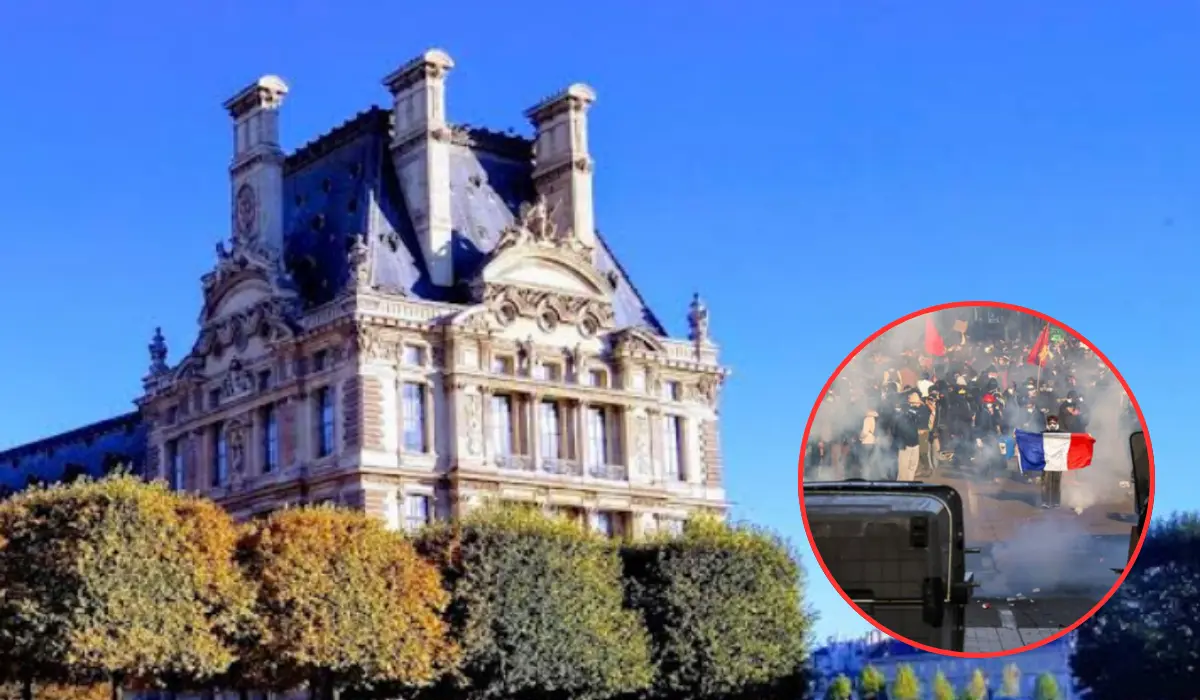
- Interior Minister Laurent Nunez announced on RTL radio that a heavy security presence will be deployed for upcoming nationwide demonstrations on Saturday and 5 November, following earlier civil unrest, violence, and looting.
- The ongoing political instability and social friction have strengthened the polling position of far-right leader Marine Le Pen ahead of the upcoming presidential election.
Paris, (France News7) October 28, 2026 – Executive Summary: French teaching unions and student organisations have declared that a newly unveiled €5 billion government reform package is insufficient to halt weeks of escalating nationwide demonstrations. The concessions—comprising class size caps, university admissions restructuring, and school renovation loans—were announced by ministers attempting to diffuse unrest that has merged with broader trade union and “Yellow Vests” grievances over cost-of-living pressures. With student leaders calling for major demonstrations on Saturday and 5 November, the government faces constrained fiscal options alongside a heavily deployed security apparatus, as the political crisis fuels momentum for far-right leader Marine Le Pen ahead of next spring’s presidential contest.
- Key Points
- What Measures Has the French Government Proposed to End the School Protests?
- Why Have High School Demonstrations Broadened Across France?
- What Next Steps Are Student Leaders and Law Enforcement Taking?
- Background of the Particular Development
- Prediction: How Will This Development Affect French Citizens and the Political Landscape?
As reported by Dominique Vidalon and Jean-Stephane Brousse of Reuters, French teachers stated on Tuesday that government proposals designed to halt weeks of street protests were inadequate and would fail to extinguish student anger across the country. The educational crisis has rapidly transformed from localized classroom disputes into a wider challenge for the state administration.
What Measures Has the French Government Proposed to End the School Protests?
As reported by Dominique Vidalon of Reuters, the French government announced a series of policy concessions on Monday in an effort to ease growing popular anger. The reform package features a commitment to cap select class sizes at 28 students, provide billions of euros in state-backed loans for building renovations across public educational facilities, and execute a comprehensive overhaul of the national university admissions system.
However, representatives from leading education unions contend that these policy adjustments do not address the core structural deficiencies within the national education system. As reported by Dominique Vidalon of Reuters, Sophie Venetitay, the Secretary General for the prominent teachers’ union SNES-FSU, told reporters that the government’s measures were fundamentally insufficient. Sophie Venetitay stated that: “Today, what the ministry has said is only the beginning of a response. It will not be enough to extinguish the anger”. Sophie Venetitay further argued that class size caps must be applied far more broadly across the academic landscape and demanded immediate recruitment drives to hire additional educational personnel to improve overall learning conditions for students.
Why Have High School Demonstrations Broadened Across France?
As reported by Dominique Vidalon of Reuters, the civil movement originally began with high school students imposing physical blockades on their academic institutions to protest against severe staffing shortages and inadequate operational resources. However, the educational movement has rapidly broadened its scope over recent weeks, coalescing with national trade union federations and the “Yellow Vests” (Gilets Jaunes) activist network.
This unified protest movement now serves as a major focal point for widespread anger regarding the degradation of French public services, rising inflation, and escalating cost-of-living pressures facing working-class households.
Concurrently, the French administration faces severe fiscal constraints. Under intense scrutiny from international bond markets to decrease the country’s public debt burden, the state possesses negligible spare capital to fulfill the economic demands made by union leaders and student strike committees.
As reported by Dominique Vidalon of Reuters, French Budget Minister David Amiel addressed the financial parameters of the reform package during an broadcast on French television network TF1. As reported by Dominique Vidalon of Reuters, David Amiel stated on TF1 that the newly introduced measures were expected to cost €5 billion ($5.6 billion) and clarified that this allocation would be entirely offset by corresponding spending cuts in other state departments.
What Next Steps Are Student Leaders and Law Enforcement Taking?
As reported by Dominique Vidalon of Reuters, student leaders acknowledged that the government’s €5 billion package represented a positive initial step, but explicitly refused to end their strike action. Student unions vowed to maintain public momentum by staging major coordinated demonstrations across French cities on Saturday and again on November 5.
In response to the announced mobilisations, the state executive is preparing a stringent law enforcement strategy. As reported by Dominique Vidalon of Reuters, French Interior Minister Laurent Nunez spoke to radio station RTL regarding the government’s security posture. As reported by Dominique Vidalon of Reuters, Laurent Nunez told RTL that there would be a heavy security presence deployed across the country on Saturday.
This security escalation follows severe nationwide demonstrations occurring two weeks prior, during which widespread street violence and commercial looting shocked the nation, prompting local prefectures to institute emergency night-time curfews and enforce temporary bans on large public gatherings.
As reported by Dominique Vidalon of Reuters, the ongoing social unrest and public dissatisfaction have significantly boosted the political fortunes of French far-right leader Marine Le Pen, who is currently favoured by political analysts to top the first round of voting in the upcoming presidential election next spring.
Background of the Particular Development
The current wave of educational unrest follows years of compounding budgetary strain across France’s state sector, where public school educators and university staff have consistently reported overcrowding, deteriorating physical facilities, and real-wage stagnation caused by persistent inflation. High school blockades—a historically potent form of student protest in France—initially re-emerged as localized responses to class cancellations and unfilled teaching positions at the start of the academic term.
The convergence of student blockades with established trade union actions and the decentralized “Yellow Vests” movement mirrors previous societal crises in France, where localized sectoral disputes expanded into generalized anti-government demonstrations. The government’s capacity to resolve such disputes is further complicated by strict European fiscal discipline commitments and sovereign debt monitoring, which prevent the French executive from enacting unfinanced emergency stimulus or large-scale public sector payroll expansions without executing offsetting budgetary cuts.
Prediction: How Will This Development Affect French Citizens and the Political Landscape?
The continuation of protests and the government’s rigid budget-neutral policy framework will directly impact multiple segments of French society over the coming weeks and months.
For students, parents, and academic staff, the rejection of the €5 billion reform package portends sustained operational disruptions across secondary and higher education institutions. With blockades scheduled for Saturday and 5 November, families face recurring class cancellations, postponed examinations, and potential safety risks near high school perimeters. Furthermore, because the €5 billion educational package requires corresponding spending cuts in other ministerial budgets, public sector employees outside education may soon experience operational tightening and reduced resource allocations within their respective departments.
For urban residents and commercial business owners, the planned demonstrations and heavy police presence raise concerns regarding localized economic disruption, transport delays, and potential property damage. Despite Interior Minister Laurent Nunez’s commitment to heavy law enforcement deployments, the memory of recent looting and curfews may suppress weekend retail activity and hospitality trade in major urban centers.
On a broader political level, the persistent standoff between the executive administration and public sector unions reinforces a perception of governmental immobility. As the political center struggles to balance fiscal demands from international bond markets with domestic social spending requests, working-class and middle-class voters may increasingly view mainstream political parties as incapable of maintaining public services or managing the cost of living. This structural friction directly benefits far-right political figures, most notably Marine Le Pen, by strengthening her campaign narrative ahead of the upcoming presidential election first round next spring