Key Points
- Fifth Consecutive Weekend of Unrest: Nationwide demonstrations took place across France on Saturday, November 14, 2026, prompting authorities to deploy approximately 70,000 police officers and gendarmes to maintain public order.
- Lyon Confrontation and Assault on Journalists: Footage from Lyon captured a protester picking up a grenade during a tense stand-off with law enforcement officers, while a BFMTV camera crew was assaulted and had its equipment destroyed and stolen.
- Nationwide Turnout and Arrests: According to the French Ministry of the Interior, 106,000 people joined protests across France on November 14, including nearly 9,000 across 55 demonstrations in Paris, where 23 individuals were detained.
- Escalation Since October: Earlier demonstrations on October 17 drew 550,000 participants according to official figures (800,000 according to unions) and resulted in widespread looting, with 317 businesses ransacked in Marseille alone and approximately 3,000 nationwide.
- Upcoming Public-Sector Strike: Public-sector trade unions have called a nationwide cross-industry strike for Tuesday, November 17, 2026, after the French government postponed purchasing-power negotiations until December.
Paris (France News7) November 15, 2026 – Demonstrations across France entered a fifth consecutive Saturday on November 14, marked by violent clashes between protesters and security forces in several major cities, including Paris, Lyon, Marseille, Rouen, and Nantes. Authorities deployed approximately 70,000 police officers and paramilitary gendarmes nationwide as 106,000 demonstrators took to the streets over the rising cost of living, public-service funding, and proposed legislation on police firearm use. In Lyon, dramatic footage showed a protester picking up a grenade during a confrontation with police, while journalists were physically assaulted. Public-sector unions have scheduled a nationwide strike for Tuesday, November 17, following the government’s decision to postpone purchasing-power talks until December.
- Key Points
- What Incident Involving a Grenade Occurred in Lyon During the Protests?
- How Many People Participated in the November 14 Demonstrations Across France?
- What Happened During Previous Flashpoints in Paris and Marseille?
- Why Were Purchasing-Power Negotiations Postponed by the French Government?
- What Factors Have Contributed to the Escalation of Protests in France?
What Incident Involving a Grenade Occurred in Lyon During the Protests?
During Saturday’s demonstrations in Lyon, France’s third-largest city, tense confrontations broke out near the front of a protest march. As reported by the Daily Express, dramatic video footage captured a demonstrator picking up a grenade while law enforcement officers attempted to secure the device during a stand-off at the rally.
Reporting by The Jerusalem Post and Agence France-Presse (AFP) noted that while the majority of the march in Lyon remained peaceful, disorder erupted near the head of the procession when fireworks were launched, a barricade was erected and set alight, and police deployed tear gas to disperse crowds.
During the disturbances in Lyon, a television crew from French broadcaster BFMTV was attacked. A freelance journalist who publishes footage under the name Medave Prod and witnessed the incident told AFP that one member of the BFMTV team was repeatedly struck by protesters and that his camera was thrown to the ground, broken, and stolen. “It was very, very violent. One of them was hit several times. His camera was thrown to the ground, broken, and then they picked it up and stole it. He was in shock,” the witness told AFP, adding that he had also been targeted. On Saturday evening, the French Ministry of the Interior announced that one suspected attacker had been arrested in connection with the assault.
How Many People Participated in the November 14 Demonstrations Across France?
According to figures released by the French Ministry of the Interior and cited by The Jerusalem Post, a total of 106,000 people participated in demonstrations across France on Saturday, November 14. Ahead of the protests, French broadcaster BFMTV reported that between 50 and 60 marches were expected nationwide, with police intelligence estimating a potential turnout of 30,000 to 60,000 demonstrators in Paris alone.
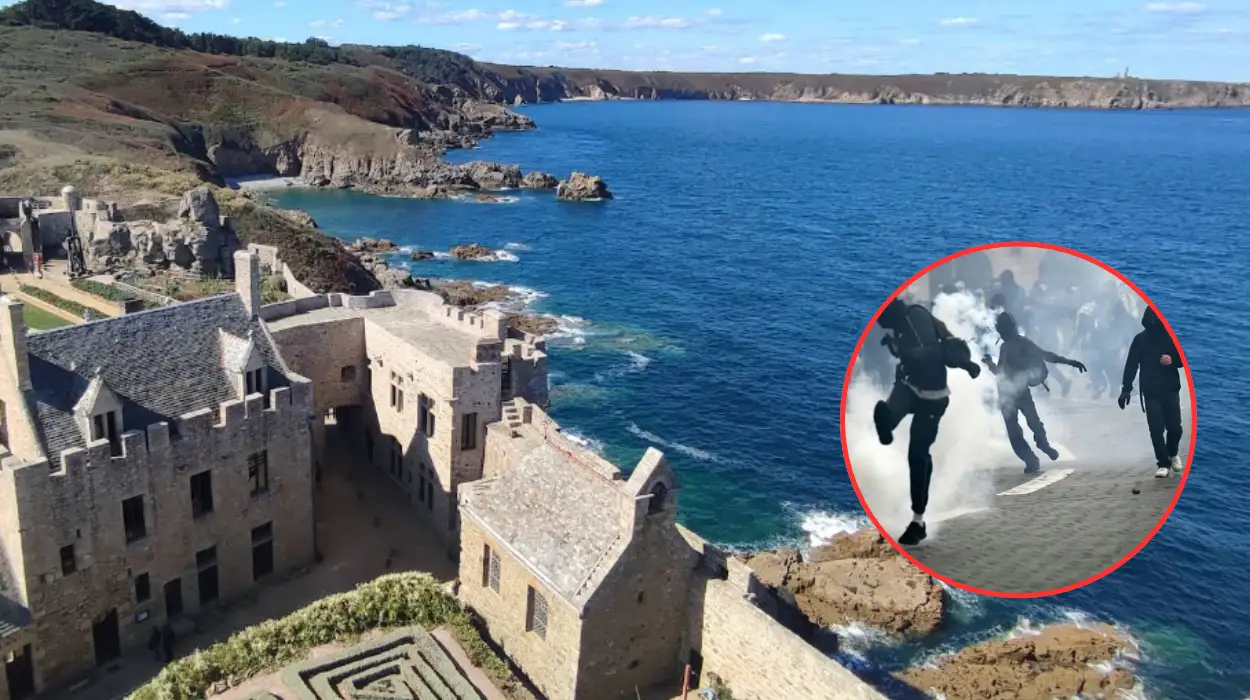
In the French capital, demonstrators marched from Place de la République through Place de la Bastille to Place de la Nation. As reported by Report News Agency, the Interior Ministry recorded nearly 9,000 participants across 55 separate gatherings in Paris during the day, where officers conducted more than 2,000 identity and security checks and detained 23 individuals. Reuters and Yonhap also documented clashes in Paris in which protesters kicked tear gas canisters and riot police detained demonstrators during marches combining cost-of-living grievances with demonstrations against police violence and violence against children.
Elsewhere in the country on November 14, tensions flared between protesters and police in Rouen, while officers in Nantes used tear gas to disperse an unauthorised gathering. In Toulouse, the demonstration concluded largely without incident.
Despite lower overall attendance compared with earlier weeks, protest organisers rejected claims that the movement was losing momentum. As reported by The Jerusalem Post, Benjamin Ball, a member of the movement’s coordinating group, stated: “We don’t get the impression that the movement is losing steam,” arguing instead that the mobilisation was “taking root” and reflected “an entire people rising up”.
What Happened During Previous Flashpoints in Paris and Marseille?
The security deployment of 70,000 personnel—maintained by Interior Minister Laurent Nuñez since the end of October—follows severe outbreaks of rioting, arson, and looting during earlier weekends of the protest cycle.
Escalation of Violence on October 17
The unrest escalated sharply on Saturday, October 17, when demonstrations drew 550,000 participants across 110 marches nationwide, including 110,000 in Paris, according to Interior Minister Laurent Nuñez, while the General Confederation of Labour (CGT) trade union placed total turnout at 800,000.
During the October 17 unrest, widespread property destruction and looting occurred in major urban centres including Paris, Marseille, Lyon, Lille, and Bordeaux. According to reporting by Reuters and The Korea Times, approximately 3,000 businesses—ranging from luxury boutiques to supermarkets—were ransacked across France within 24 hours, with a further 1,500 shops severely damaged and more than 1,500 fires involving vehicles and public equipment recorded.
In Marseille, local authorities reported that 317 businesses were ransacked during the October 17 disturbances, while black-clad protesters broke into the Marseille city hall and toppled a bust of Marianne. In Limoges, rioters set fire to the 19th-century city hall while municipal police officers took shelter inside; the officers escaped without injury, and prosecutors subsequently opened an investigation into attempted murder charges against a 34-year-old suspect. The Lyon tourism office was also set ablaze. Prime Minister Sébastien Lecornu stated following the October 17 weekend that 1,200 individuals had been arrested and 150 police officers and gendarmes injured, with overall injury tallies across emergency services exceeding 1,000 personnel alongside more than 400 civilians.
Disturbances on October 31 and November 7
Further clashes occurred during demonstrations on Saturday, October 31. According to the Daily Express, masked protesters in Paris threw projectiles at police, who responded with tear gas and baton charges. One officer was struck by a Molotov cocktail during the confrontation, leaving three officers with burn injuries. French authorities reported more than 500 arrests nationwide that day. In Marseille on October 31, protesters set rubbish bins alight and threw projectiles at law enforcement, leaving 19 officers injured according to the local prefecture.
On Saturday, November 7, the Ministry of the Interior recorded 146,000 demonstrators nationwide, including 46,000 in Paris, while unions estimated 250,000 nationally and 75,000 in the capital. According to Al Jazeera, police used tear gas and batons in Paris and fired tear gas canisters at hundreds of protesters blocking a road in central Lyon, though officials noted the day passed without the large-scale looting seen in October.
Why Were Purchasing-Power Negotiations Postponed by the French Government?
Industrial tensions have intensified ahead of a planned nationwide strike on Tuesday, November 17, called by six French civil service and public-sector trade unions. As reported by the Daily Express, unions announced the walkout after the French government postponed formal negotiations on public-sector purchasing power until December.
According to industry reporting by myKN, Le Marin, and TF1, the six civil service organisations are demanding immediate pay increases and inflation indexing for public employees. Union representatives held preliminary discussions with Public Accounts Minister David Amiel earlier in the week and were scheduled to meet Prime Minister Sébastien Lecornu on Friday, November 13, in an effort to address wages and working conditions ahead of Tuesday’s cross-industry day of action.
What Factors Have Contributed to the Escalation of Protests in France?
Background of the Protest Movement
The current wave of civil unrest originated in mid-September 2026, when high-school students across France staged walkouts and demonstrations to protest against deteriorating infrastructure and learning conditions in state schools. Over subsequent weeks, the student-led actions expanded into a broader nationwide coalition incorporating university students, teachers, major trade unions, farmers, climate activists, and participants from the Yellow Vest (Gilets Jaunes) movement, which first emerged in 2018 in response to fuel tax increases and rising living costs.
As the movement broadened, demonstrators’ demands centred on persistent inflation, stagnant wages, high fuel and housing costs, and perceived reductions in public services. Another focal point of opposition during the November marches has been a government-backed legislative proposal altering regulations governing the use of firearms by police officers. While the government has proposed targeted improvements to school funding and an accelerated increase to the minimum wage, student organisations and trade unions have stated that those measures do not sufficiently address household purchasing power. Across Europe, Al Jazeera tracked more than 1,700 cost-of-living demonstrations across 31 countries between mid-September and early November, with France recording the largest mobilisations.
Outlook and Potential Impact on French Commuters, Public Services, and Businesses
With public-sector trade unions proceeding with the cross-industry strike scheduled for Tuesday, November 17, French commuters, students, businesses, and port operators face heightened disruption across transport networks, schools, and municipal administrations. Maritime terminals, rail services, and urban transit systems are expected to experience service reductions if union walkouts proceed across civil service and transport sectors.
For retail businesses and local authorities in major cities such as Paris, Lyon, and Marseille, the continuation of weekly demonstrations alongside heightened security deployments—which have already prompted the postponement and relocation of a G7 interior ministers’ summit scheduled for November 20–21 from Lyon to Paris—indicates ongoing operational disruptions and security precautions until wage negotiations resume in December.