Key Points
- U.S. President Donald Trump and Vice President JD Vance attributed French protest violence to open-border immigration and failed integration.
- French President Emmanuel Macron and French high school student protesters dismissed the American claims as baseless political intervention.
- French authorities placed over 2,000 people in police custody—the majority being minors—and enacted selective municipal curfews.
- Constitutional provisions prohibit the French government from collecting racial or ethnic demographic data on arrested individuals.
- Political leaders in Hungary and Poland echoed border security arguments, whilst French analysts framed the unrest as an integration issue rather than an immigration problem.
Paris (France News7) October 22, 2026 – French political leaders and student demonstrators have rejected attempts by United States President Donald Trump to attribute recent nationwide protest violence and looting to European immigration policies. Following intense clashes triggered by student-led demonstrations over educational infrastructure and social conditions, American officials framed the disorder as a consequence of open borders. French authorities have maintained that the unrest stems from domestic civic and integration issues, emphasizing that constitutional laws prohibit race-based data collection.
- Key Points
- Why Are Foreign Officials and Experts Divided Over the Root Causes of French Unrest?
- How Have European and American Politicians Used the French Riots to Drive Domestic Policy Debates?
- Background of the particular development after the news
- Prediction: How this development can affect international relations and domestic policy
Paris, France – As France reels from violent clashes during protests, riots, and looting, the political debate surrounding responsibility has intensified across the Atlantic. One argument gaining traction across conservative political sectors in the United States and parts of Europe asserts that open-border policies and international migration are directly responsible for the widespread destruction in French cities.
As reported by Virginia Pietromarchi of Al Jazeera, United States President Donald Trump issued a stern assessment outside the White House on Monday, asserting that “If Europe doesn’t close its borders and bring the criminals out, like the people that are protesting, Europe is finished”. As documented by Pietromarchi, President Trump added, “When I look at France, when you look at Italy, when you look at all the turmoil and the hatred – that’s not about school. That’s about people coming into the countries that hate the country”.
As reported by Pietromarchi, French President Emmanuel Macron subsequently rejected the remarks during an official visit to Qatar, criticizing “stupid comments by many, including foreign leaders”. As noted in the report by Pietromarchi, President Macron stated that there was no evidence of foreign interference or external orchestration behind the domestic riots.
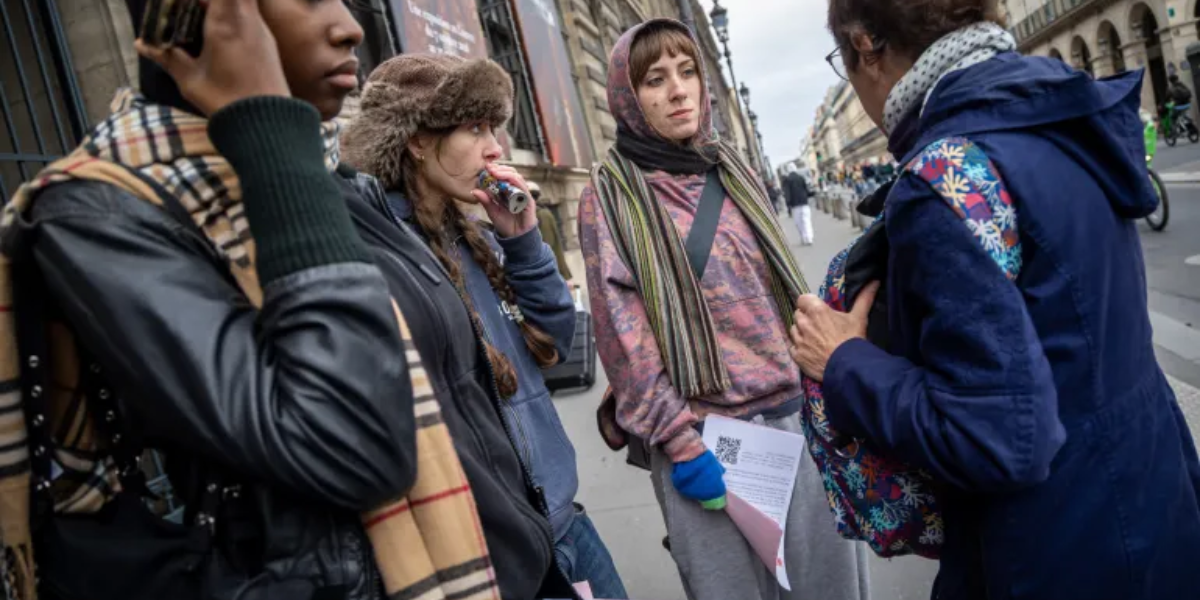
Student participants involved in the initial mobilization also responded to the American statements. As recorded by Pietromarchi, Bilal Narjissi, a 17-year-old student at the Paul Eluard high school near Paris, characterized President Trump’s intervention as “stupid talk”. As quoted by Pietromarchi, Narjissi stated: “They can think whatever they like. We’re focusing on the main subject, which is the students’ demands. The far right has to say these kinds of things because they base their politics and political programmes on instilling fear”.
Why Are Foreign Officials and Experts Divided Over the Root Causes of French Unrest?
As reported by Virginia Pietromarchi of Al Jazeera, Emmanuel Dupuy, president of the Institute for European Perspective and Security Studies—a think tank specializing in diplomacy and political analysis—argued that President Trump’s commentary was tailored primarily for an American domestic audience. As detailed by Pietromarchi, Dupuy stated: “It’s an artificial argument used as a political tool in the context of midterm elections. They are trying to argue that what is happening in France would happen in the US if Democrats get elected”.
The political exchanges followed a series of initially peaceful demonstrations organized by high school students that degraded into chaotic confrontations over the weekend. Municipal buildings and city halls were attacked, and thousands of retail businesses were ransacked, marking some of the most destructive unrest recorded in France in recent years.
In response to the escalations, French judicial and law enforcement authorities placed more than 2,000 individuals into police custody. Officials confirmed that the vast majority of those detained were minors. To restore public order, local prefectures instituted temporary and partial nighttime curfews across specific municipal areas, including designated sectors of Paris.
While the student protests initially focused on structural deficiencies in educational facilities—such as dilapidated buildings, overcrowded classrooms, and severe shortages of teaching staff—the movement rapidly expanded to encompass broader social discontent regarding the rising cost of living and domestic economic inequality. Comparable public demonstrations and student-led actions have also been observed in neighboring nations, including Italy, Albania, and Spain.
French state authorities have not established an official link between criminal activity during the riots and international migration. Under long-standing constitutional equality laws in France, the collection or publication of official state data regarding the race, ethnicity, or national origin of arrested individuals is strictly prohibited. Consequently, the state does not release demographic identity metrics for individuals placed on trial.
Domestic political figures across the French spectrum have offered differing assessments of the violence. As reported by Pietromarchi, both far-right leader and presidential candidate Marine Le Pen, alongside politicians from the centrist government bloc—including President Macron and Prime Minister Sébastien Lecornu—have directed blame toward hard-left political factions, accusing them of inciting disorder and violence during the student marches.
How Have European and American Politicians Used the French Riots to Drive Domestic Policy Debates?
The events in France have resonated across European capitals. As reported by Virginia Pietromarchi of Al Jazeera, Hungarian Prime Minister Péter Magyar posted a video on the social media platform X showing burning buildings in France, writing that it was now “clear to everyone why Hungary takes the toughest possible stance on immigration”.
As documented by Pietromarchi, Polish Prime Minister Donald Tusk also posted a statement on X following the mass demonstrations and looting in France, asserting: “Poland will not repeat the mistakes of other European countries, nor will it pay for them. We will be uncompromising on security”.
Analyzing the composition of the crowds, Emmanuel Dupuy emphasized that focusing on migration status misinterprets the structural dynamics of French social protest. As cited by Pietromarchi, Dupuy stated: “These protesters were high school students; then professional black bloc and looters joined, too – whether they came from a third or fourth generation of former migrants is irrelevant. Eventually, this is a problem of integration, not immigration”.
In the United States, political figures are actively campaigning ahead of the upcoming midterm elections, which will decide the balance of power in the U.S. Congress. Republican leadership has utilized European news developments to build support for President Trump’s agenda and border security measures.
As reported by Pietromarchi, United States Vice President JD Vance posted an assessment on X, stating: “Western liberals imported the third world into France and other countries in the name of diversity and compassion. They ignored fundamental questions of assimilation and compatibility”.
Political observers and critics noted that the U.S. administration’s focus on European developments coincides with domestic economic challenges in the United States, including cost-of-living pressures and rising energy prices tied to ongoing conflict in the Middle East and disruptions surrounding the Strait of Hormuz.
Addressing supporters at a campaign rally in Kansas, President Trump reiterated his stance, framing the events in Europe as a direct warning to American voters. As reported by Pietromarchi, President Trump stated: “If you want to see what is at stake in this election, just look at what’s happening in France”.
Background of the particular development after the news
The clash of narratives between French state leadership and foreign observers follows a recurring pattern of political friction over civil unrest in Western Europe. Over the past decade, France has experienced periodic, highly visible waves of urban unrest, ranging from the Gilets Jaunes (Yellow Vests) economic protests to student strikes and localized suburban riots.
Under Article 1 of the French Constitution, the French Republic is defined as indivisible and secular, which strictly forbids the government from categorizing citizens by ethnicity, race, or religion in legal or judicial proceedings. As a result, objective statistical analysis linking crime or protest participation to specific ethnic backgrounds remains legally unfeasible within the French judicial framework.
Simultaneously, the political rhetoric surrounding European border enforcement has become central to electoral strategies in both North America and Central Europe, where political leaders frequently point to Western European urban disorder to justify strict border enforcement, national sovereignty measures, and anti-immigration legislation.
Prediction: How this development can affect international relations and domestic policy
This diplomatic and political friction is likely to impact several key stakeholder groups and policy domains:
- French High School and University Students: Continued focus on immigration rhetoric by foreign and domestic politicians risks overshadowing the core grievances of the student movement, such as decaying public school infrastructure, teacher shortages, and youth economic anxiety. If policy debates remain fixated on border security rather than social investment, student organizations are likely to continue or escalate protest actions.
- Transatlantic Diplomatic Relations: Public disagreements between French state leaders and U.S. officials underscore deepening ideological divides over domestic governance, human rights, and border control. Continued rhetorical intervention by U.S. leaders into European domestic affairs could strain bilateral cooperation within multilateral forums such as NATO and the G7.
- European Union Immigration and Border Policy: High-profile endorsements of strict border controls by leaders in Eastern and Central European nations (such as Hungary and Poland) will likely strengthen the bloc’s conservative factions. This could accelerate demands for stricter EU-wide border enforcement mechanisms, asylum restrictions, and enhanced internal security protocols across member states.
- American Midterm Electorate: For voters in the United States, international reporting on European unrest will serve as a central talking point in debates surrounding domestic border policy, economic management, and civic stability, reinforcing partisan narratives ahead of congressional elections.