Key Points
- Engie Chief Executive Officer Catherine MacGregor publicly pushed back against anti-capitalist presidential candidate Jean-Luc Mélenchon’s proposals to renationalise the French energy giant.
- The exchange occurred following a high-profile dinner meeting in Paris on Tuesday, November 17, 2026, which brought together prominent French corporate leaders—including TotalEnergies CEO Patrick Pouyanné, LVMH CEO Bernard Arnault, and Renault Chairman Jean-Dominique Senard—and hard-left political figure Jean-Luc Mélenchon.
- Appearing on France Inter on Wednesday, November 18, 2026, Catherine MacGregor stated that nationalisation is unnecessary for the company to deliver on investments, develop renewable energy sources, and manage strategic reserves.
- Jean-Luc Mélenchon, widely projected by opinion polls to secure a strong position in the upcoming presidential run-offs, defended his participation in the dinner as a necessary dialogue on establishing policy compromises, despite deep ideological divisions.
- Business leaders and corporate executives have increasingly engaged with leading political figures across the ideological spectrum ahead of France’s spring 2027 presidential election amidst contentious debates surrounding economic interventionism, market regulation, and the national energy transition.
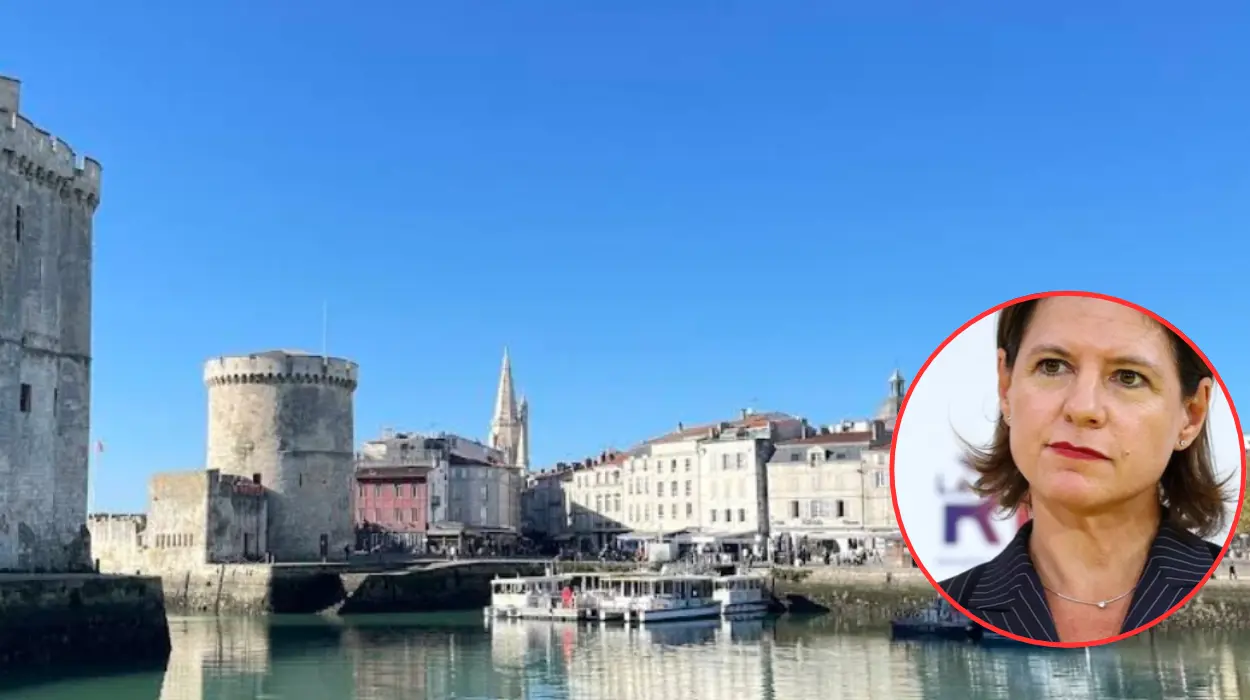
Paris (France News7) November 18, 2026 – Engie Chief Executive Officer Catherine MacGregor has firmly rejected plans by hard-left presidential contender Jean-Luc Mélenchon to bring the energy major back under state ownership. Speaking on French radio following a high-stakes dinner dialogue between corporate executives and political figures in Paris, Catherine MacGregor argued that state renationalisation is not a prerequisite for driving green investments and securing energy supplies. The public divergence highlights mounting tensions between major French business leaders and radical economic platforms as the country prepares for the upcoming presidential elections.
- Key Points
- What Happened at the Paris Dinner Meeting Between Business Leaders and Jean-Luc Mélenchon?
- How Did Jean-Luc Mélenchon Justify Participating in the Corporate Dinner?
- What Broader Economic and Energy Policies Are at Stake in the Presidential Race?
- Background: The Evolution of State Ownership and Energy Liberalisation in France
- Prediction: How Will Political Polarization and Nationalisation Debates Affect Energy Investments and Corporate Planning?
What Happened at the Paris Dinner Meeting Between Business Leaders and Jean-Luc Mélenchon?
As reported by Reuters journalists Makini Brice, Dominique Vidalon, Elizabeth Pineau, Dominique Patton, Tassilo Hummel, and Mathieu Rosemain, Engie CEO Catherine MacGregor addressed the contentious political encounter during an interview on France Inter on Wednesday, November 18, 2026. The commentary followed a private dinner held on Tuesday, November 17, 2026, which convened major French corporate figures alongside Jean-Luc Mélenchon, who is widely projected to be a leading contender for the left in France’s presidential race.
According to reporting by the French daily Le Figaro cited by Reuters, other prominent business executives in attendance at the gathering included TotalEnergies Chief Executive Officer Patrick Pouyanné, luxury goods conglomerate LVMH CEO Bernard Arnault, and Renault Chairman Jean-Dominique Senard. The closed-door meeting provided a forum for direct discussions between major industrial leaders and the hard-left political leader regarding future economic governance.
Reflecting on the exchanges during her France Inter interview, Catherine MacGregor noted that the dinner was conducted in an atmosphere of open dialogue despite fundamental disagreements over corporate ownership and energy strategy. Addressing Jean-Luc Mélenchon’s core political platform—which advocates for bringing strategic utilities and energy infrastructure back into public hands—Catherine MacGregor stated: “We don’t need to nationalise Engie in order for Engie to invest in France, develop renewables, take care of its stocks”. She added that international affairs and broader economic challenges were also reviewed during the discussions.
How Did Jean-Luc Mélenchon Justify Participating in the Corporate Dinner?
Jean-Luc Mélenchon defended his decision to meet with France’s business elite while speaking to reporters on the sidelines of a cost-of-living protest in Paris on Tuesday, November 17, 2026. Acknowledging the sharp ideological contrast in the room, Jean-Luc Mélenchon stated: “We need to see how people like them – who are utterly politically radicalised, you know – and people like me, who have a programme and will stick to it, what sort of compromise we can reach”.
Representatives from Jean-Luc Mélenchon’s political movement, La France Insoumise (France Unbowed), declined to provide additional comment on the private discussions. Meanwhile, TotalEnergies confirmed that its CEO, Patrick Pouyanné, was present at the event, echoing past public statements emphasizing the practical necessity of maintaining open communication channels with political figures across the ideological spectrum, including populist and radical movements.
What Broader Economic and Energy Policies Are at Stake in the Presidential Race?
Opinion polls tracking France’s political landscape indicate that Jean-Luc Mélenchon is positioned to secure a strong showing in the upcoming presidential election, though current projections point toward a potential second-round runoff against far-right National Rally leader Marine Le Pen.
Jean-Luc Mélenchon’s electoral platform encompasses major structural overhauls that directly impact the corporate and energy sectors, including:
- Renationalisation of Key Infrastructure: Bringing major energy providers, transport networks, and utility operators back under state control.
- Pension and Labour Reforms: Reversing President Emmanuel Macron’s 2023 pension legislation to restore the legal retirement age to 60 for individuals who have completed 40 years of contributions, alongside implementing mandatory hikes to the national minimum wage.
- Energy Market and Environmental Policy: Phasing out nuclear power in favour of a transition to 100 per cent renewable energy sources, alongside introducing stringent price caps on essential consumer goods and energy tariffs.
Corporate leaders have expressed mounting apprehension regarding these interventionist proposals. Engie, which was formerly a fully state-owned entity, currently maintains a structure where the French state retains a 23 per cent equity stake. Chief executives have frequently cautioned that aggressive regulatory caps, forced public acquisitions, and shifts away from technological neutrality could impair capital allocation and undermine the predictability required for long-term infrastructural investments.
The engagement between corporate leaders and political figures extends across the political spectrum. Major executives have similarly participated in high-level discussions with far-right leader Marine Le Pen, whose platform features proposals to withdraw from the European electricity market, dismantle independent energy regulators, and halt the ongoing development of specific renewable energy projects. Catherine MacGregor previously voiced sharp criticism of those far-right energy proposals, warning that policies undermining market integration and renewable expansion would prove detrimental to France’s long-term economic stability.
Background: The Evolution of State Ownership and Energy Liberalisation in France
The debate over the ownership structure of Engie and other French energy utilities reflects decades of shifting industrial policy in France. Historically, the French state exercised direct, centralized control over the nation’s energy supply through monopolistic public institutions established in the post-World War II era, such as Gaz de France (GDF) and Électricité de France (EDF). These entities were designed to guarantee universal public access, drive national industrialisation, and ensure energy independence.
Beginning in the late 1990s and accelerating through the 2000s under European Union directives promoting market liberalisation, the French energy sector underwent significant restructuring. The merger of Gaz de France and Suez in 2008 created GDF Suez, which was subsequently rebranded as Engie in 2015. Through successive share offerings and partial privatisations, the French state reduced its direct equity holding, though it retained a significant blocking minority stake (currently standing at 23 per cent) to safeguard strategic national interests.
In recent years, global energy crises, geopolitical supply volatility, and the massive capital requirements of the European green transition have reignited political debates regarding state intervention. While centrist administrations have favoured public-private partnerships, state-backed loans, and regulated market mechanisms to guide decarbonisation, left-wing parties argue that essential utilities must return to full public ownership to protect consumers from market price shocks and guarantee democratic oversight of public goods. Conversely, right-wing and far-right factions have emphasized national sovereignty, often proposing exits from integrated European market frameworks to prioritize domestic pricing controls.
Prediction: How Will Political Polarization and Nationalisation Debates Affect Energy Investments and Corporate Planning?
As France moves closer to the spring 2027 presidential election, the intensifying friction between corporate leadership and political hopefuls is expected to exert tangible effects across the energy and financial sectors:
- Private Investment and Capital Allocation: Uncertainty surrounding potential post-election nationalisation or aggressive regulatory price caps may prompt institutional investors and energy majors to adopt cautious capital deployment strategies in France, weighing domestic policy risks against more predictable regulatory frameworks elsewhere in Europe.
- Corporate Advocacy and Political Engagement: Chief executives of major French blue-chip companies are likely to increase direct engagement with political candidates across all parties—including populist and radical factions—to defend market-based transition models and attempt to moderate interventionist policy proposals before they are codified into official government platforms.
- Renewable Energy Deployment Timelines: Discrepancies between political proposals to phase out nuclear power or halt renewables and corporate strategies focused on balanced, diversified energy mixes could create friction in executing long-term infrastructure projects, directly impacting engineering firms, utility operators, and industrial consumers across France.