


Key Points
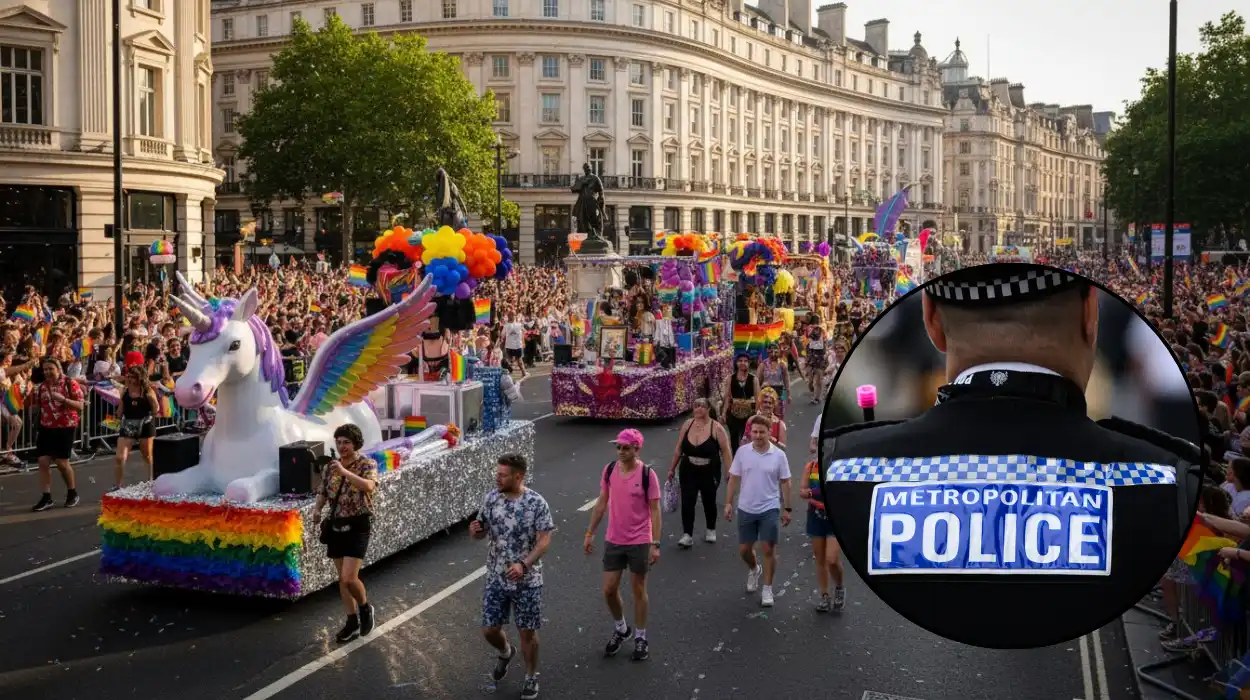
- More than one million spectators lined the route as over 35,000 marchers from upwards of 600 groups took part in London Pride 2026.
- The parade ran from Hyde Park Corner through Piccadilly to Whitehall Place on Saturday 4 July 2026.
- Mayor of London Sadiq Khan led the march, joining the crowd in chants of “Happy Pride”.
- Performers Beth Ditto and MNEK headlined the Trafalgar Square main stage; organisers confirmed Madonna would not attend despite speculation.
- Temperatures reached 28C, prompting organisers to urge attendees to carry suncream and water.
- The Metropolitan Police deployed 650 officers and reiterated a zero-tolerance approach to hate crime.
- Four issues dominated activist messaging: trans healthcare access, visibility for Black and Brown queer people, chosen family rights, and rising hate crime.
- NHS gender-affirming care waiting lists now exceed four years in some regions.
- Since 2006, 58 per cent of London’s LGBTQ+ venues have closed.
- More than 18,000 sexual-orientation hate crimes were recorded by London’s police in 2025.
- Campaigner Peter Tatchell criticised FIFA over its inaction on eleven countries that ban gay footballers from World Cup competition.
- Arsenal, West Ham and Crystal Palace entered floats in the parade; Lidl, Tesco and IKEA publicly reaffirmed support for LGBTQ+ inclusion.
- London formally launched its bid to host WorldPride 2032.
London (Britain Today News) July 06, 2026 – London’s streets turned into a river of colour on Saturday as London Pride 2026 brought more than one million spectators onto the pavements between Hyde Park Corner and Whitehall Place, in a display of celebration that organisers and activists alike used to press the case for further progress on LGBTQ+ rights across Britain.
- Key Points
- What Happened at London Pride 2026?
- Which Artists Performed at the Trafalgar Square Stage?
- What Security Measures Were in Place?
- What Core Issues Did Activists Highlight This Year?
- How Long Are Trans Healthcare Waiting Lists in England?
- Why Are LGBTQ+ Venues Disappearing From London?
- What Do the Latest Hate Crime Figures Show?
- What Did Peter Tatchell Say About FIFA and Gay Footballers?
- Did Local Councils Restrict Pride Flags This Year?
- How Did Football Clubs and Businesses Show Their Support?
- What Is London’s Bid to Host WorldPride 2032?
- What Comes Next for London’s LGBTQ+ Community?
What Happened at London Pride 2026?
More than 35,000 marchers, representing upwards of 600 community groups, charities, workplaces and sports clubs, walked the route through Piccadilly and into central London. The scale of the event placed it among the largest Pride gatherings the capital has staged, with crowds packed several rows deep along much of the route to watch the procession pass. The parade combined the atmosphere of a street carnival with the tone of a political demonstration, a duality organisers say has defined Pride in London for years.
Who Led the Parade Through Central London?
The parade was led by the Mayor of London, Sadiq Khan, who marched with participants and joined in chants of “Happy Pride” as the procession moved off. His presence at the front of the march has become a fixture of the event in recent years, and his participation this year came as he continued to voice support for the capital’s LGBTQ+ communities amid what campaigners describe as a more hostile national climate for trans rights in particular.
Which Artists Performed at the Trafalgar Square Stage?
Once the march reached its conclusion, attention turned to the main stage in Trafalgar Square, where singers Beth Ditto and MNEK delivered headline performances that energised crowds gathered in the square. Speculation had circulated in the run-up to the event that pop star Madonna might make a surprise appearance; organisers moved to confirm ahead of the day that she would not be attending this year’s festivities, closing off further speculation.
How Did the Heatwave Affect the Event?
Temperatures climbed to a high of 28C over the course of the day, and organisers issued advice to attendees to bring suncream and water bottles to cope with the summer heat. The warm weather added to the festival atmosphere but also required organisers to factor in welfare provisions along the route and at the Trafalgar Square site, given the density of the crowds and the length of time many spent outdoors.
What Security Measures Were in Place?
Policing for the event was substantial, with 650 officers deployed by the Metropolitan Police across the route and surrounding areas. The force reiterated what it described as a “no tolerance” stance on hate crime during the event itself, a message organisers say is intended to reassure attendees that any abuse or violence directed at marchers or spectators would be treated as a priority for investigation. The scale of the policing operation reflects both the size of the crowds and the continuing concern among organisers about safety at LGBTQ+ events.
What Core Issues Did Activists Highlight This Year?
Beyond the music and the spectacle, London Pride 2026 organisers framed the day around four themes: improving access to trans healthcare, increasing visibility and support for Black and Brown members of the queer community, securing legal recognition for chosen family relationships, and confronting a rise in hate crime. Campaigners used placards, speeches and conversations along the route to draw attention to each of these areas, arguing that celebration and advocacy have always gone hand in hand at Pride events.
How Long Are Trans Healthcare Waiting Lists in England?
Central to the healthcare theme was the disclosure that NHS gender-affirming care waiting lists now stretch beyond four years in some parts of the country. Campaigners described the delay as one of the most pressing issues facing trans people in Britain today, arguing that prolonged waits for assessment and treatment have a direct impact on mental health and quality of life for those affected. The statistic featured prominently in placards and speeches along the route, with several groups calling for the government and NHS bodies to expand capacity for gender identity services.
Why Are LGBTQ+ Venues Disappearing From London?
A further concern raised throughout the day was the decline in dedicated LGBTQ+ social spaces across the capital. Figures cited at the event show that 58 per cent of London’s LGBTQ+ venues have closed since 2006, a trend campaigners link to rising commercial rents, changing nightlife habits and reduced footfall following the pandemic years. Community groups argued that the loss of physical venues removes safe social spaces that have historically underpinned LGBTQ+ community life in the city, and several marchers called for local councils to do more to protect remaining venues from closure or redevelopment.
What Do the Latest Hate Crime Figures Show?
Hate crime statistics also loomed large over the day’s proceedings. According to figures shared at the event, London’s police recorded more than 18,000 hate crimes motivated by sexual orientation during 2025 alone. Organisers and campaigners pointed to the figure as evidence that, despite decades of visible progress symbolised by events such as Pride, everyday safety for LGBTQ+ people in the capital remains far from guaranteed. Several attendees said the statistic underlined why the Metropolitan Police’s zero-tolerance messaging at this year’s event mattered to them personally.
What Did Peter Tatchell Say About FIFA and Gay Footballers?
Among the most pointed remarks of the day came from veteran campaigner Peter Tatchell, who used the platform of Pride to renew his criticism of football’s global governing body. Tatchell said FIFA was “doing nothing” about the eleven countries that continue to ban gay footballers from participating in World Cup competition, framing the issue as an example of a major international institution failing to use its influence to protect LGBTQ+ people within sport. His comments added a sporting dimension to a day otherwise focused on domestic policy concerns such as healthcare and hate crime.
Did Local Councils Restrict Pride Flags This Year?
Activists at the march also raised concerns about a separate and, they said, related trend: decisions by some local councils to ban the display of Pride flags on public buildings and in public spaces. Campaigners argued that such restrictions send a discouraging signal to LGBTQ+ residents in the areas affected and questioned why greater institutional support was not forthcoming from major public bodies more broadly, a criticism they said applied equally to sporting institutions such as FIFA.
How Did Football Clubs and Businesses Show Their Support?
Community and corporate participation was highly visible along the route. Premier League clubs Arsenal, West Ham and Crystal Palace each entered floats in the parade, reflecting what organisers describe as a growing willingness among football clubs to publicly back LGBTQ+ inclusion initiatives. Commercial sponsors were similarly prominent, with Lidl, Tesco and IKEA all reaffirming their support for LGBTQ+ inclusion through their involvement in the day’s events. Organisers said the presence of major retailers and sporting institutions alongside grassroots campaign groups illustrated the breadth of participation the event now attracts, even as campaigners continued to press those same institutions to go further on issues such as the FIFA World Cup bans raised by Tatchell.
Explore More about London:
Jordan Donica and Sierra Boggess Join The Phantom of the Opera’s 40th Anniversary London Cast
Tower of London at Risk: City Corporation Slams Government as ‘Anti-Growth’
What Is London’s Bid to Host WorldPride 2032?
The day also carried a forward-looking announcement, with organisers using the event to formally launch London’s bid to host WorldPride 2032. The bid is intended to position the capital as a long-term global centre for LGBTQ+ celebration and advocacy, building on the scale and profile of this year’s march. Organisers framed the bid as a statement of ambition for the city, though any formal decision on the host city would rest with the international body responsible for awarding future WorldPride events.
Where Can People Access Support and Report Hate Crime?
Alongside the day’s celebrations, organisers pointed attendees towards existing sources of support. Guidance for LGBTQ+ residents is available through the Greater London Authority’s dedicated support pages, while information on reporting hate crime can be found through the Metropolitan Police Service. For those seeking information on NHS services, including gender-affirming care, the NHS provides dedicated guidance on gender dysphoria services and referral pathways.
What Comes Next for London’s LGBTQ+ Community?
As the crowds dispersed from Whitehall Place on Saturday evening, organisers and campaigners said the scale of this year’s turnout demonstrated continued public appetite for LGBTQ+ celebration in the capital, even as the statistics presented throughout the day underscored how much work remains. From NHS waiting lists to venue closures, hate crime figures to international sporting bans, London Pride 2026 combined a festival atmosphere with a sustained, data-backed case for further action, one that organisers say they intend to keep pressing as the city pursues its WorldPride 2032 ambitions.